December 8, 2012

Chris Hayes on Climate Change

MSNBC's Chris Hayes: 'The Time For Choosing Sides On Climate Change Is Now


Visit NBCNews.com for breaking news, world news, and news about the economy


We need a crash program in this country right now to re-engineer the nation's infrastructure to cope with and prepare for the climate disruptions that we have already ensured with the carbon we've already put into the atmosphere, as well as an immediate, aggressive transformation of our energy production, economy and society to reduce the amount of carbon we'll put into the atmosphere in the future.

...the time for choosing is now. You are either on the side of your fellow citizens and residents of this planet, or you are on the side of the storms as yet unnamed.
You cannot be neutral.
Which side are you on?

December 5, 2012

We Will Lead on Climate Change

A mailbox sits on the porch of a burned out home in Breezy Point

"Extreme weather is the new normal. In the past two years, we have had two storms, each with the odds of a 100-year occurrence. Debating why does not lead to solutions—it leads to gridlock. The denial and deliberation from extremists on both sides about the causes of climate change are distracting us from addressing its inarguable effects. Recent events demand that we get serious once and for all. We need to act, not simply react."

Our electrical power grid and the structures that control it must undergo a fundamental redesign. Power utilities are the equivalent of vinyl records in the age of the iPod: antiquated, 1950s-style institutions that don't serve our current needs.

The electrical system is particularly vulnerable. Entire above-ground wire networks in heavily wooded areas spell disaster in virtually every storm, yet nothing is being done to rectify this obvious vulnerability. 

There is no more time for debate. This is our moment to act. We have been tested before, and we have always risen to the challenge. We will not allow the national paralysis over climate change to stop us from pursuing the necessary path for the future.

Nuclear Reactors and Dams

Whistleblowers accuse NRC of inaction in the face of potentially catastrophic flood risks at nuclear plants that sit downstream from large dams.
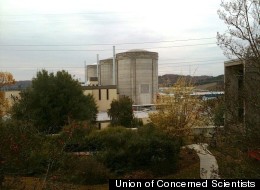
The Oconee Nuclear Station in South Carolina

David Lochbaum, a nuclear engineer and safety advocate with the Union of Concerned Scientists, a Cambridge, Mass.-based advocacy group, calculated that the 34 reactors highlighted in Perkins's analysis are downstream from a total of more than 50 dams -- half of them roughly the size of the Jocassee Dam. "Assuming the NRC's failure rate applies to all of those dams," Lochbaum noted in an 
analysis posted to the group's web site, "the probability that one will fail in the next 40 years is roughly 25 percent -- a 1 in 4 chance."


Taken together, the documents and charges shed new light on an agency that has been repeatedly criticized for allowing plant owners to delay crucial safety improvements for years, and for diligently withholding information not as a way of protecting the public interest, but as a way of protecting itself.

Suffocating the World in Plastic Bags

Created by Learnstuff.com

December 3, 2012

Coal company stops mountain top mining!

Hobet Surface Mine, West Virginia
Patriot Coal has agreed to stop mountain top mining. We can hope this will start a trend for other coal companies.

"Patriot Coal recognizes that our mining operations impact the communities in which we operate in significant ways, and we are committed to maximizing the benefits of this agreement for our stakeholders, including our employees and neighbors," Hatfield said in court. "We believe the proposed settlement will result in a reduction of our environmental footprint."

[Forbes

Politics of Climate Change

According to a new analysis released by the World Resources Institute, there are nearly 1,200 new coal plants planned for construction around the world. Most of those plants will be built in China and India, but there are dozens planned for America, Australia, Europe, and Russia.

Mr. McKibben Goes to Washington with a simple message: Do the Math!
[Climate Progress]

Lessons for Post Sandy Sustainability - Sometimes it is better for people to get out of the way [Climate Progress]

Preparing for the next Sandy - robust and resilient response needed 
[Climate Progress

The State University of New York at Buffalo announced Monday that it was closing its newly formed Shale Resources and Society Institute, which was devoted to the study of hydraulic fracturing, citing "a cloud of uncertainty over its work." [New York Times]