December 5, 2012

Nuclear Reactors and Dams

Whistleblowers accuse NRC of inaction in the face of potentially catastrophic flood risks at nuclear plants that sit downstream from large dams.
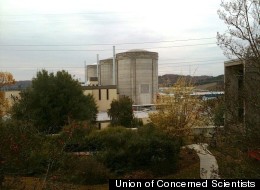
The Oconee Nuclear Station in South Carolina

David Lochbaum, a nuclear engineer and safety advocate with the Union of Concerned Scientists, a Cambridge, Mass.-based advocacy group, calculated that the 34 reactors highlighted in Perkins's analysis are downstream from a total of more than 50 dams -- half of them roughly the size of the Jocassee Dam. "Assuming the NRC's failure rate applies to all of those dams," Lochbaum noted in an 
analysis posted to the group's web site, "the probability that one will fail in the next 40 years is roughly 25 percent -- a 1 in 4 chance."


Taken together, the documents and charges shed new light on an agency that has been repeatedly criticized for allowing plant owners to delay crucial safety improvements for years, and for diligently withholding information not as a way of protecting the public interest, but as a way of protecting itself.

Suffocating the World in Plastic Bags

Created by Learnstuff.com

December 3, 2012

Coal company stops mountain top mining!

Hobet Surface Mine, West Virginia
Patriot Coal has agreed to stop mountain top mining. We can hope this will start a trend for other coal companies.

"Patriot Coal recognizes that our mining operations impact the communities in which we operate in significant ways, and we are committed to maximizing the benefits of this agreement for our stakeholders, including our employees and neighbors," Hatfield said in court. "We believe the proposed settlement will result in a reduction of our environmental footprint."

[Forbes] 

Politics of Climate Change

According to a new analysis released by the World Resources Institute, there are nearly 1,200 new coal plants planned for construction around the world. Most of those plants will be built in China and India, but there are dozens planned for America, Australia, Europe, and Russia.

Mr. McKibben Goes to Washington with a simple message: Do the Math!
[Climate Progress]

Lessons for Post Sandy Sustainability - Sometimes it is better for people to get out of the way [Climate Progress]

Preparing for the next Sandy - robust and resilient response needed 
[Climate Progress] 

The State University of New York at Buffalo announced Monday that it was closing its newly formed Shale Resources and Society Institute, which was devoted to the study of hydraulic fracturing, citing "a cloud of uncertainty over its work." [New York Times]


December 1, 2012

The scariest story


Hopes of home fade for Japanese

Hopes of home fade for displaced Japanese in wake of Fukushima "it may take decades, perhaps generations" to recover. [NY Times]


A temporary housing complex, where some fled after Fukushima disaster.

Harvard students vote for divestment

The Harvard College Undergraduate Council revealed that students have voted overwhelmingly for the university to divest its $30.7bn endowment from fossil fuel-related assets. 

Campaigners for the group Students for the Just and Stable Future said 72 per cent of undergraduates had voted in favor of proposals that would see the university divest any interests it holds in the top 200 publicly traded fossil fuel companies.
"In 1990, 52 per cent of voting students supported complete divestment from apartheid South Africa," said Chloe Maxmin, a co-coordinator for Divest Harvard, in a statement. "[Now] 72 per cent of voting students are raising their voices for fossil divestment, telling Harvard to stop investing in companies that are threatening our future."
The campaign group is the first student body in six years to secure the 670 signatures necessary for a referendum question to be included in student body elections, and the vote makes fossil fuel divestment the official stance of the Harvard College Undergraduate Council.