March 30, 2014

5 reasons we know extreme weather events are increasing


2002, 2003, 2006, 2007, 2010 

Those are the 5 hottest summers in European history between 1500 and 2010. 
The 5 coldest summers in European history? 1695, 1821, 1888, 1902, 1923
See the trend? 

European summer temperatures for 1500–2010. Vertical lines show the temperature deviations from average of individual summers, the five coldest and the five warmest are highlighted. The grey histogram shows the distribution for the 1500–2002 period with a Gaussian fit shown in black. That 2010, 2003, 2002, 2006 and 2007 are the warmest summers on record is clearly not just random but a systematic result of a warming climate. 

The European heat wave of 2003 may not have destroyed any buildings – but it is well documented that it caused about 70,000 fatalities. This is the type of event for which the probability has increased by a factor of five due to global warming – and is likely to rise to a factor twelve over the next thirty years. 

In a 2011 paper published in the Proceedings of the National Academy, the authors calculated the expected number of monthly heat records based the observed gradual changes in climate. The paper determined that we should experience five times the number of heat records with 1 degree of warming versus the number expected in a stationary climate. This is exactly what we are seeing. 

I calculated the probability that the 5 hottest summers in 510 years all came from the last decade. The odds would be less than 1 in a billion if we were in a stable climate! 

I've been thinking a lot about what standards we should use for designing resilient buildings that are capable of handling these types of extreme weather events. 


This paper would suggest that our building design decisions may actually save lives. If heat waves, like the European heat wave of 2003 that killed 70,000 people, are going to be 12x more likely over the next 30 years – how should we design our buildings so they are able to maintain healthy temperatures at affordable costs when the extreme heat waves hit here at home? 

March 23, 2014

Sun Edison sells solar electricity for 5 cents a kWh

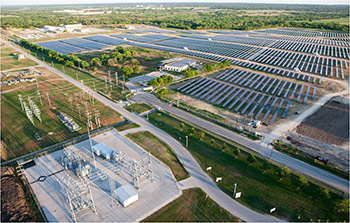
City-owned utility Austin Energy is about to sign a 25-year PPA (power purchase agreement) with Sun Edison for 150 megawatts of solar power at “just below” 5 cents per kilowatt-hour. The power will come from two West Texas solar facilities, according to reports in the Austin American-Statesman. According to reports, around 30 proposals were at prices near SunEdison’s. Austin Energy has suggested that the PV deal will slightly lower rates for customers.
This is one of the lowest, if not the lowest, reported prices for contracted solar that we have seen. Last year, First Solar (FSLR) entered a 25-year PPA in New Mexico for 50 megawatts of solar power at 5.79 cents per kilowatt-hour. That number included a significant PTC (production tax credit) from the state. The Macho Springs project, the Austin project and most solar projects of this nature rely on the 30 percent federal Investment Tax Credit.
Austin Energy’s net sub-five cent price does not include any state PTC, according to Monty Humble of energy development firm Brightman Energy. He said that the utility was “to be commended” for this solicitation. Humble added, “Based on our analysis, it can be done. There’s not a whole lot of profit in it, but it’s not a loss leader. It’s a legitimate bid.”
GTM Solar Analyst Cory Honeyman points out that “new PPAs signed in North Carolina fetched prices between 4.5 and 5 cents per kilowatt-hour.” Like Macho Springs, those projects could also take advantage of an in-state tax credit to make the economics work. Honeyman said that none of the projects in Georgia or North Carolina were larger than 20 megawatts, so 5 cents does seem like “an unprecedented low for large-scale projects.”
Bret Kadison, COO of Austin-based Brazos Resources, an energy investment firm, said this was “a highly competitive solicitation.” Although historically, “Texas hasn’t been a hotbed of solar, you’re starting to see that change. ERCOT needs the generation.”
He expects to see more solar activity “not just as a green source of energy, but as an affordable source of energy. Texas is seeing economic growth, but the power grid has not kept pace.” Kadison added, “When you think about the volatility of natural gas, a 25-year PPA starts to look pretty attractive.”
Kadison notes, “This is below the all-in cost of natural gas generation, even with low fuel prices and before factoring in commodity volatility and cost overruns.” He also points out that the original RFP was for 50 megawatts, but the utility ended up buying 150 megawatts “in a red state where hydrocarbons dominate the political landscape.” Kadison suggests that “one of the biggest cost reduction drivers that allowed solar to reach this parity came from the massive reduction in financing costs.”
The 5-cent price falls below Austin Energy’s estimates for natural gas at 7 cents, coal at 10 cents and nuclear at 13 cents. The utility points out that it approved a 16.5-cent price for the Webberville solar plant in 2009.
Austin Energy has a 35 percent renewable energy resource goal by 2016 and a solar goal of 200 megawatts by 2020. The utility is currently at about 25 percent, much of it made up by its 850 megawatts of wind.
Humble of Brightman Energy said, “I expect that this will force a lot of players to reexamine their approach and get far more aggressive. Because of the size of the ERCOT market and the size of the state, Texas is potentially the largest solar market in the country.” According to GTM Research’s 2013 U.S. SMI report, Texas ranked 8th in the nation with 75 megawatts installed in 2013.
GTM’s Honeyman notes, “This is the second major announcement in which a utility has stated plans to procure more than 100 megawatts of solar PV based on its cost-competitiveness with natural gas, as opposed to RPS-driven demand.” [Renew Economy]

IEA says integrating up to 45% renewable energy quite cost effective

The International Energy Agency (IEA) has released a report concluding that integration of large amounts of renewable energy can be achieved by any country at only a small increase on whole-system costs, compared with the current fossil-fuel-heavy electricity systems.

Making the conclusion even more startling is the fact that the IEA used present-day costs for solar PV and wind, with the two most widely deployed renewable energy technologies set to provide the bulk of the generating capacity in these transformed electricity systems.

While renewable energy is often blamed for driving electricity prices up and having a costly destabilizing affect on electricity grids, the IEA says that integration of renewables into electricity grids and markets can be done so at little cost. 

For the first 5 percent to 10 percent of what it calls variable renewable energy (VRE, essentially wind and solar), the IEA says this poses no technical or economic challenges at all. Even for higher levels of up to 45 percent penetration, the reports says it would cost only 10 percent to 15 percent more than the status quo.

"Based on a thorough assessment of flexibility options currently available for renewable energy integration, a major finding of this publication is that large shares of variable renewable energy (up to 45% in annual generation) can be integrated without significantly increasing power system costs in the long run." [IEA]


One way to encourage public transportation

You can see the Eiffel Tower -
if you look carefully
Paris imposed a ban on 50% of all cars in the center of the city as a way of lowering severely unhealthy levels of smog. 

Cars with odd numbered plates will drive on odd numbered days - Cars with even numbered plates will be allowed to drive on even numbered days.  Fines will be 22 Euros for anyone driving on the wrong day. 

According to the European Environment Agency (EEA), Belgium, Germany, and France all faced dangerous levels of air pollution with three quarters of France recording PM10 concentrations above the 50 micrograms per cubic meter legal limit. [Business Green


Electric Buses Pleasing Passengers

A large, 60-foot electric bus has been running for almost two weeks in Sao Paulo, Brazil where it has transported over 135,000 passengers since hitting the road. The electric buses are quiet, fuel-free, and reduce air and greenhouse gas pollution.

The bus, which can hold 124 passengers and travel 125 miles without recharging, is winning over local approval for its quietness and international approval for being environmentally friendly. The battery-powered buses do not require cables, as is the basis for the electric trolleybuses that use the city’s grid.

“The bus is super-healthy for the planet and can do its job almost like diesel-fueled models, thanks to its recharge technology and use of energy,” Ivan Regina, manager of the Sao Paulo state government Transport Planning, Technological Development and Environment unit, told Efe.

From a climate and environmental perspective, the battery-powered bus is a clear leader.
“The battery-powered bus has all the flexibility of diesel and does not emit greenhouse gases,” said Ivan Regina, the Planning and Projects manager for the EMTU. “It is a dream bus.” [Climate Progress

Duke Energy illegally dumping coal ash

Duke personnel using a portable water pump
to empty its coal ash pond. 
North Carolina regulators on Thursday cited Duke Energy for illegally and deliberately dumping 61 million gallons of toxic coal ash waste into a tributary of the Cape Fear River, which provides drinking water for several cities and towns in the state.

The incident marks the eighth time in less than a month that the company has been accused of violating environmental regulations. The North Carolina Department of Environment and Natural Resources (DENR) said Duke — notorious for the February Dan River disaster which saw 82,000 tons of coal ash released into state waters — was taking bright blue wastewater from two of its coal ash impoundments and running it through hoses into a nearby canal and drain pipe.

Fake Tesla Ad is a lot of fun

This fake Tesla advertisement is a lot of fun... 

and the story of the 2 recent college grads who created it is just as fun.