Showing posts with label Water. Show all posts

April 3, 2017

Climate Change, Water and Trees

The benefits of moving beyond our focus on energy.

When we talk about "energy", certainly in terms of policy, we usually mean what fuels our cars and heats our homes. Let's look at energy in a very basic sense, as in what happens when sunlight meets the ground. Say you have pavement, or land marked by degraded, exposed soil – the condition of much of the world's surface. When the sun beams down on that bare soil, solar energy is absorbed; it becomes sensible heat, or heat you can feel. Now amble over to a nice meadow, or well-managed rangeland with a thick carpet of grasses. Here solar energy touches down on plants that are transpiring. The solar heat is dispersed and becomes latent heat, embodied in water vapour, to be condensed and released as rain.

Climate is not a function of one sole metric; it is not a single story. And this is where we find opportunities.
When faced with an environmental predicament, it can be useful to inquire as to how nature has approached similar scenarios. For instance, in the case of wildfire, one can ask what processes used to keep that landscape hydrated and therefore resilient to fire. We learn that in the American west, beavers created wetlands and acted as "shock absorbers" that minimised fire risks. And when we ask what maintains our climate, the answer is water.
Were it not for the blanket of water vapour that buffers the Earth, our planet would be too cold to inhabit. The phase changes of water – from solid to liquid to gas, and back – represent an extraordinary transfer of heat. According to Australian microbiologist Walter Jehne, water-based processes in the atmosphere and the oceans, over land and across ice, govern some 95% of Earth's natural heat dynamics. It is the sheer immensity of water's role in climate that led scientists to conclude that humans could not have interfered with it. And yet, once we understand how water works – and how water intersects with factors we can influence, such as land use and plant cover – we can help to restore the processes that sustain the heat and energy balance, and therefore sustain our climate.
A deforested area in the middle of the Amazon jungle. Photograph: Raphael Alves/AFP/Getty Image
Peter Andrews, a farmer and author in Australia, made a statement that has stuck with me: "Plants manage water. And in managing water, they manage heat." Worth noting: we have de-vegetated a quarter of the planet – including destroying most of our natural forests.
Every square metre of Earth's surface receives an average of 342 watts of solar energy a day. Because of how humans have altered the environment, we now radiate back about 339 watts per square metre – a difference of less than 1%. If we managed our ecology better, how might we make up that three-watt differential? How about if we had a lot more plant cover and a lot less bare ground?

August 28, 2015

How much water does it take to make dinner?

Here are two excellent articles with absolutely outstanding graphics on the amount of water it takes to produce our food. 


​

September 26, 2013

Wildfires and Water

The problems stemming from climate change will be expressed through water. On the Atlantic coast, we all have images of waves pouring into and through our cities, but in the West, the issue is not one of too much water, but too little. 

Climate change makes wet places wetter and dry places drier. In the West, one result of a long term drought is more and more devastating wildfires.

2013 is already a huge wildfire year; and it may become a record year after a series of very bad wildfire years. So far this year almost 4,000,000 million acres have burned, an area larger than the state of Connecticut. 

Here in San Francisco, we have become acutely aware of the dangers the Rim Fire near Yosemite. That fire is already the largest fire in the recorded history of the Sierra Nevada, a fact that by itself should give everyone pause. For many of us though, the surprise has been the threat this fire has posed to our drinking water, most of which comes from the Hetch Hetchy Reservoir in Yosemite National Park. The threat to our drinking water will continue for years because of erosion and flooding as a result of the burned forest.

San Francisco is not alone. Twenty-percent of the clean water for our nation's cities originates in forests. In the west, major cities depend on water from forests. In addition to San Francisco, Seattle, Portland, Denver and even Los Angeles depend on clean water that originates in forests. Huge wildfires could pose a toxic threat to metropolitan populations hundreds of miles from the fire, populations that feel falsely secure from these fires. [Climate Progress]

August 11, 2013

We Could Be Heros

Five years ago, the United Nations Food and Agricultural Organization published a report called "Livestock's Long Shadow," which maintained that 18 percent of greenhouse gases were attributable to the raising of animals for food. The number was startling. [Some reports say that number is even higher.] 

What [matters] is that few people take the role of livestock in producing greenhouse gases seriously enough. Even most climate change experts focus on new forms of energy ...and often ignore the much easier fix of adjusting our eating habits.

The earth may very well be running out of clean water, and by some estimates it takes 100 times more water (up to 2,500 gallons) to produce a pound of grain-fed beef than it does to produce a pound of wheat. We're also running out of land: somewhere around 45 percent of the world's land is either directly or indirectly involved in livestock production, and as forests are cleared to create new land for grazing animals or growing feed crops, the earth's capacity to sequester greenhouse gases (trees are especially good at this) diminishes.


I could go on and on about the dangers of producing and consuming too much meat:  heavy reliance on fossil fuels and phosphorous (both in short supply); consumption of staggering amounts of antibiotics, a threat to public health; and the link to many of the lifestyle diseases that are wreaking havoc on our health.

Here's the thing: It's seldom that such enormous problems have such simple solutions, but this is one that does. We can tackle climate change without inventing new cars or spending billions on mass transit or trillions on new forms of energy, though all of that is not only desirable but essential.

In the meantime, we can begin eating less meat tomorrow. That's something any of us can do, with no technological advances. If personal choice enacted on a large scale could literally save the world, maybe we have to talk about it that way. We could be heroes, like Bruce Willis in "Armageddon," only maybe the sacrifice is on a more modest and easier scale. (You already changed your light bulbs; how about eating a salad?)

Mark Bittman - We Could Be Heros


The act I want to talk about is growing some — even just a little — of your own food. In fact it's one of the most powerful things an individual can do — to reduce your carbon footprint, sure, but more important, to reduce your sense of dependence and dividedness.
A great many things happen when you plant a vegetable garden, some of them directly related to climate change, others indirect but related nevertheless. Growing food comprises the original solar technology: calories produced by means of photosynthesis. Years ago [we] discovered that more food could be produced ...by replacing sunlight with fossil-fuel fertilizers and pesticides, with a result that the typical calorie of food energy in your diet now requires about 10 calories of fossil-fuel energy to produce. 

Yet the sun still shines down on your yard, and photosynthesis still works so abundantly that in a thoughtfully organized vegetable garden (one planted from seed, nourished by compost from the kitchen and involving not too many drives to the garden center), you can grow the proverbial free lunch — CO2-free and dollar-free. This is the most-local food you can possibly eat (not to mention the freshest, tastiest and most nutritious). And while we're counting carbon, consider too your compost pile, which shrinks the heap of garbage your household needs trucked away even as it feeds your vegetables and sequesters carbon in your soil. 

What else? Well, you will probably notice that you're getting a pretty good workout there in your garden, burning calories without having to get into the car to drive to the gym. (It is one of the absurdities of modern life that, having replaced physical labor with fossil fuel, we now burn even more fossil fuel to keep our unemployed bodies in shape.) Also, by engaging both body and mind, time spent in the garden is time (and energy) subtracted from electronic forms of entertainment.

You begin to see that growing even a little of your own food is, as Wendell Berry pointed out 30 years ago, one of those solutions that, instead of begetting a new set of problems — the way "solutions" like ethanol or nuclear power inevitably do — actually beget other solutions, and not only of the kind that save carbon. 

Still more valuable are the habits of mind that growing a little of your own food can yield. You quickly learn that you need not be dependent on specialists to provide for yourself — that your body is still good for something and may actually be enlisted in its own support. If the experts are right, if both oil and time are running out, these are skills and habits of mind we're all very soon going to need. We may also need the food. Could gardens provide it? Well, during World War II, victory gardens supplied as much as 40 percent of the produce Americans ate.

But there are sweeter reasons to plant that garden. At least in this one corner of your yard and life, you will have begun to heal the split between what you think and what you do, to commingle your identities as consumer and producer and citizen. 

Chances are, your garden will re-engage you with your neighbors, for you will have produce to give away and the need to borrow their tools. You will have reduced the power of the cheap-energy mind by personally overcoming its most debilitating weakness: its helplessness and the fact that it can't do much of anything that doesn't involve division or subtraction. The garden's season-long transit from seed to ripe fruit — will you get a load of that zucchini?! — suggests that the operations of addition and multiplication still obtain, that the abundance of nature is not exhausted. The single greatest lesson the garden teaches is that our relationship to the planet need not be zero-sum, and that as long as the sun still shines and people still can plan and plant, think and do, we can, if we bother to try, find ways to provide for ourselves without diminishing the world.
- Michael Pollen - The Way We Live Now

July 22, 2013

Water, Power and everything else

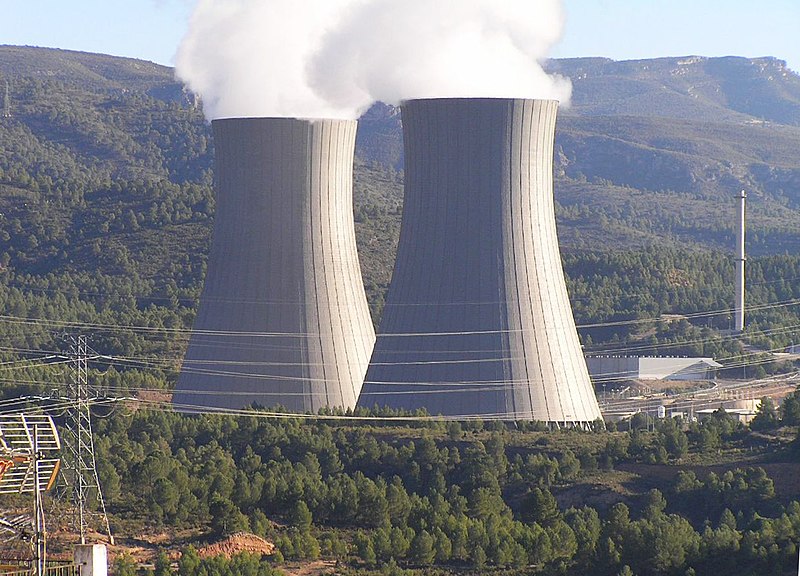
Nuclear and fossil fuel power plants are Europe's single biggest consumer of water — accounting for 43 percent of all surface water withdrawal. [Climate Progress] 

We have a very similar situation here in the US with 47% of all fresh water used to cool our nuclear and fossil fuel plants. 

Switching to renewable energy sources like wind and solar will help us solve both the climate crisis and the water crisis. 

Because buildings use 73% of all electricity and power plants use 47% of the water in the US – that means that our buildings' energy use is responsible for 34% of all water used in the US. 

Improving our building's energy efficiency actually lowers our demand for water. Not many folks realize that reducing our energy demand by 20% will also lower our water demand by 7%. 

So many things get better when you start moving to renewable energy – not just energy and water. 

For example, renewable energy creates 3 times more jobs than oil and gas drilling or coal mining. Every dollar invested in clean energy results in 3 times more jobs than investing that same dollar in fossil fuels.  And those jobs pay better than oil, gas and coal jobs (approximately 13% better).  On top of that, those jobs are much, much safer than oil, coal and gas jobs. People working in oil and gas drilling fields have 7x the fatality rate when compared to the US average. 

Health effects – coal is such a dirty fuel that burning coal to generate electricity causes 100 times more deaths per kWh than wind power. It has been shown that children exposed to mercury emissions from coal plants have significantly lower IQs.  Natural gas – the "clean" fossil fuel -  causes 28 times more deaths per kWh than wind power. 

I could go on – but you get the picture. 


Switching to renewable energy is a huge part of the solution to climate change, but it will also help the economy by creating  more and better paying jobs and everyone in the country will be healthier and more productive. It also has the added benefit of reducing demand for water so that we can grow our food without draining our rivers dry. It may even make our kids smarter – and we certainly will need smart kids if we want to make the transition to a sustainable future. 


January 22, 2013

A Viable Alternative to Bottled Water

San Francisco has proposed requiring new water fountains to include a special bottle-filling tap. Proponents believe that this is the first step in weaning people off of the habit of grabbing a new bottle of water every time they get thirsty.

This new tap aims to solve problems associated with traditional water fountains, like not being so friendly to reusable water bottles because of their low arc. Also, the fears of germs from the spout (which experts believe are unfounded) have deterred some from using them as well.

December 13, 2012

Tar Sands: Crude Behavior

How bad are the tar sands? This bad: 

The scale of tar sands devastation is mind-numbing. 

Tar sands are sludge. A sticky, viscous, tarry material that literally oozes from the ground in certain areas of northern Canada and other places like Russia, Venezuela, and even right here in the US. Technically called "bitumen," tar sands can be processed into gasoline and other petroleum products, though it takes more effort and causes a lot more pollution than conventional oil, the liquid we're used to seeing drilled up by rigs in Texas or Saudi Arabia. The cornerstone of the argument against tar sands is that because it requires so much energy to turn from sludge into gasoline, it produces a significantly greater amount of the carbon dioxide which is turning our atmosphere into a heat-trapping blanket and fundamentally altering nearly every ecosystem on Earth. 

It takes about three barrels of water to extract one barrel of oil. More than 90 percent of this water, 400 million gallons per day, ends up as toxic waste dumped in massive pools that contain carcinogenic substances like cyanide.

About 100 trillion gallons of tar sands have been discovered so far.  The vast majority is in Canada, which holds around three quarters of the world total.

September 15, 2012

Food or Natural Gas?

A new race for water is rippling through the drought-scorched heartland, pitting farmers against oil and gas interests, driven by new drilling techniques that use powerful streams of water, sand and chemicals to crack the ground and release stores of oil and gas.

A single such well can require five million gallons of water, and energy companies are flocking to water auctions, farm ponds, irrigation ditches and municipal fire hydrants to get what they need.
That thirst is helping to drive an explosion of oil production here, but it is also complicating the long and emotional struggle over who drinks and who does not in the arid and fast-growing West. Farmers and environmental activists say they are worried that deep-pocketed energy companies will have purchase on increasingly scarce water supplies as they drill deep new wells that use the technique of hydraulic fracturing.
"It's not a level playing field," said Peter V. Anderson, who grows corn and alfalfa on the parched plains of eastern Colorado. "I don't think in reality that the farmer can compete with the oil and gas companies for that water. Their return is a hell of a lot better than ours."

In average years, farmers and ranchers like Mr. Anderson say they pay about $30 for an acre foot of water — equal to about 326,000 gallons — a price that can rise to $100 when water is scarce. In the spring, during an annual auction of surplus water in northern Colorado, Mr. Anderson and a handful of other farmers were outbid by water haulers who supply hydraulic fracturing wells. 


August 8, 2012

Electricity and Water

Every year, the United States consumes more than 3 trillion KWh of electricity. This power is generated by coal-fired power plants, nuclear plants, solar panels, hydroelectric damns, wind turbines, geothermal wells, and other sources and it requires water to produce.

As much as 41% of all water used in the United States goes to power plants to produce electricity, making them the single largest water consumer in the nation.