Showing posts with label solar finance. Show all posts

March 1, 2015

Solar is a better investment than the stock market


A study by the NC Clean Energy Technology Center finds that in all but 4 of the 50 largest cities in the U.S., installing a fully-financed 5 kilowatt solar panel system makes more financial sense than investing in a popular stock market index fund. 
Further, the same system would beat the costs of buying energy from local utilities in 42 of those 50 cities. 
Boston is ranked the #2 city for solar in the country for immediate average monthly savings, the relative value of investing in solar versus the S&P 500, and the levelized cost of solar energy compared to local utility rates. 
"(S)olar is now ...a real opportunity for anyone looking to take greater control over their monthly utility bills and make a long-term, relatively low-risk investment," concludes the study which was done under funding by the U.S. Department of Energy.
Looking at the levelized cost of energy for solar PV systems (the average cost per kilowatt over the expected 25-year life span), the NC Clean Energy Technology Center's study found that nearly 21 million homeowners in 42 of the nation's largest cities would save money with financed solar systems over getting their power from the grid.
For average homeowners, the study concludes, "solar can generate both significant monthly savings and long-term investment value, and not infrequently, cost less than energy from some of America's largest electric utilities."

March 23, 2014

Sun Edison sells solar electricity for 5 cents a kWh

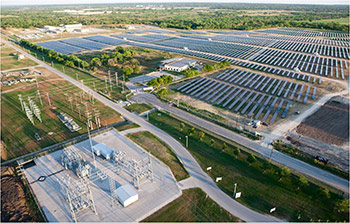
City-owned utility Austin Energy is about to sign a 25-year PPA (power purchase agreement) with Sun Edison for 150 megawatts of solar power at “just below” 5 cents per kilowatt-hour. The power will come from two West Texas solar facilities, according to reports in the Austin American-Statesman. According to reports, around 30 proposals were at prices near SunEdison’s. Austin Energy has suggested that the PV deal will slightly lower rates for customers.
This is one of the lowest, if not the lowest, reported prices for contracted solar that we have seen. Last year, First Solar (FSLR) entered a 25-year PPA in New Mexico for 50 megawatts of solar power at 5.79 cents per kilowatt-hour. That number included a significant PTC (production tax credit) from the state. The Macho Springs project, the Austin project and most solar projects of this nature rely on the 30 percent federal Investment Tax Credit.
Austin Energy’s net sub-five cent price does not include any state PTC, according to Monty Humble of energy development firm Brightman Energy. He said that the utility was “to be commended” for this solicitation. Humble added, “Based on our analysis, it can be done. There’s not a whole lot of profit in it, but it’s not a loss leader. It’s a legitimate bid.”
GTM Solar Analyst Cory Honeyman points out that “new PPAs signed in North Carolina fetched prices between 4.5 and 5 cents per kilowatt-hour.” Like Macho Springs, those projects could also take advantage of an in-state tax credit to make the economics work. Honeyman said that none of the projects in Georgia or North Carolina were larger than 20 megawatts, so 5 cents does seem like “an unprecedented low for large-scale projects.”
Bret Kadison, COO of Austin-based Brazos Resources, an energy investment firm, said this was “a highly competitive solicitation.” Although historically, “Texas hasn’t been a hotbed of solar, you’re starting to see that change. ERCOT needs the generation.”
He expects to see more solar activity “not just as a green source of energy, but as an affordable source of energy. Texas is seeing economic growth, but the power grid has not kept pace.” Kadison added, “When you think about the volatility of natural gas, a 25-year PPA starts to look pretty attractive.”
Kadison notes, “This is below the all-in cost of natural gas generation, even with low fuel prices and before factoring in commodity volatility and cost overruns.” He also points out that the original RFP was for 50 megawatts, but the utility ended up buying 150 megawatts “in a red state where hydrocarbons dominate the political landscape.” Kadison suggests that “one of the biggest cost reduction drivers that allowed solar to reach this parity came from the massive reduction in financing costs.”
The 5-cent price falls below Austin Energy’s estimates for natural gas at 7 cents, coal at 10 cents and nuclear at 13 cents. The utility points out that it approved a 16.5-cent price for the Webberville solar plant in 2009.
Austin Energy has a 35 percent renewable energy resource goal by 2016 and a solar goal of 200 megawatts by 2020. The utility is currently at about 25 percent, much of it made up by its 850 megawatts of wind.
Humble of Brightman Energy said, “I expect that this will force a lot of players to reexamine their approach and get far more aggressive. Because of the size of the ERCOT market and the size of the state, Texas is potentially the largest solar market in the country.” According to GTM Research’s 2013 U.S. SMI report, Texas ranked 8th in the nation with 75 megawatts installed in 2013.
GTM’s Honeyman notes, “This is the second major announcement in which a utility has stated plans to procure more than 100 megawatts of solar PV based on its cost-competitiveness with natural gas, as opposed to RPS-driven demand.” [Renew Economy]

June 20, 2012

Japan approves feed in tariffs

The Japanese government has approved generous green energy feed-in tariffs as part of a drive to significantly expand renewable power generation.

Under the feed-in tariffs, utilities will pay 42 yen (53 U.S. cents) per kilowatt hour for solar-generated electricity and 23 yen per kilowatt hour for wind-generated electricity. The subsidies, designed to encourage individuals and businesses to install solar panels and wind turbines, have been essential in developing a renewable energy sector in countries such as Germany.


May 4, 2012

Solar Gaining Momentum with Churches

Solar Gaining Momentum Among Churches 

This article talks about St. Paul's Episcopal Church in Walnut Creek, CA installing solar panels. 

In an interesting coincidence - St. Paul's Episcopal Church in Brookline, MA has just finished installing solar panels on their roof as well! 


June 14, 2011

Google wants to put solar panels on your roof

Google announces $280 Million rooftop panel push

Google has continued its multimillion dollar push into the booming US solar industry, announcing yesterday that it has teamed up with installation specialist SolarCity to launch a new $280m fund capable of financing residential solar projects.
The fund, which is the largest residential solar financing scheme launched to date, will provide solar panel leases and power purchase agreements to households, allowing them to install solar panels at no upfront cost.
The deal is the latest in a series of partnerships signed by SolarCity, which now operates 15 project funds with seven different partners, offering a total of $1.28bn in finance to solar projects.
"Google is setting an example that other leading American companies can follow," he said in a statement. "The largest 200 corporations in the US have more than $1tr in cash on their balance sheets. Investments in solar energy generate returns for corporate investors, offer cost savings for homeowners, create new, local jobs for jobseekers, and protect the environment from polluting power sources."

March 15, 2009

Financing Solar Power


The NY Times has an excellent article "Harnessing the Sun " 

California has passed a law to allow towns to finance solar projects and have the residents pay them back as part of their property tax. 

That way if they move, the cost of the system passes to the next owner. Simple. Easy. 

We ought to be writing to tell our local legislators that we want the ability to do the same thing.